
Table of Contents
Introduction
NetSuite sits at the core of operations for thousands of growing businesses, managing everything from financials and inventory to customer engagement and reporting. But as companies expand, so do their support needs. System downtime, integration challenges, and evolving business processes make dependable support essential for stability and scalability. That’s why understanding the available NetSuite support offerings is critical. Whether you rely on Oracle’s direct services or work with a certified partner, the type of support you choose can shape how effectively your ERP adapts to growth, change, and complexity. This blog explores each support model’s pros, cons, and key considerations to help you make the right decision for your organization.
Understanding NetSuite's Direct Support
As businesses grow, the demands on their ERP systems increase. Choosing the right NetSuite support offerings becomes essential to maintaining performance, resolving issues efficiently, and adapting to change without disruption.
Oracle’s direct support model offers official, vendor-backed assistance for NetSuite customers. This typically includes access to the knowledge base, technical troubleshooting, scheduled product updates, and support ticket resolution through Service Level Agreements (SLAs). Because it’s fully embedded in the platform’s ecosystem, direct support teams work with internal diagnostic tools and have backend visibility unavailable to third-party providers.
Advantages of Direct NetSuite Support
- Immediate Access to Updates and Fixes: Customers receive patches, hotfixes, and new feature rollouts as soon as they’re available, ensuring system security and compliance without delay.
- In-Depth Platform Knowledge: Oracle’s support staff is trained exclusively on NetSuite, which means they can accurately handle issues across core modules and standard configurations.
- Streamlined Escalation and Visibility: Because the support team works directly within the NetSuite environment, they can trace issues at the source—accessing system logs and backend data that third-party partners typically can’t see.
Limitations of Direct NetSuite Support
- Higher Cost and Less Flexibility:
Support contracts are often bundled into licensing agreements and have limited room for negotiation or termination. This can lead to higher long-term costs and less control over service scope. - Generic Solutions Might Not Cater to Specific Business Needs: While the platform expertise is strong, support reps often lack detailed knowledge of a customer’s unique workflows, industry use cases, or custom configurations, leading to standard recommendations that may not fully address complex issues.
- Limited Process Guidance: Direct support tends to focus on resolving system-level bugs and errors rather than advising on process optimization or helping teams adapt NetSuite to evolving operational needs.
- Longer Wait Times for Resolution: As a global platform with a large customer base, Oracle support queues can get backlogged, especially during peak times or widespread system updates. This may delay issue resolution for smaller or mid-sized clients.
Further Reading: Common NetSuite Support Issues and How to Resolve Them
This model is ideal for businesses running standard modules or those that value close alignment with Oracle. However, companies with advanced customizations, integration-heavy environments, or industry-specific requirements may find flexibility lacking and thus need more sophisticated NetSuite support offerings.
Explore Flexible Support with a NetSuite Partner
Unlock the full potential of NetSuite with AlphaBOLD's expert support solutions. Get started with us for superior results!
Request a ConsultationUnpacking Third-Party NetSuite Support Offerings
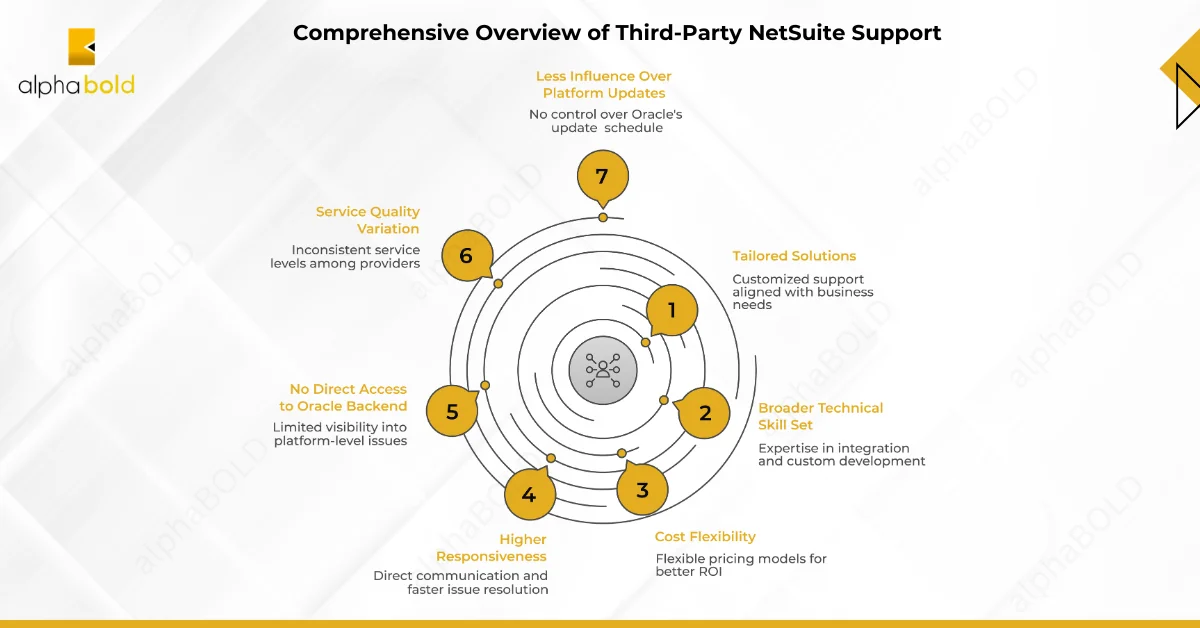
Third-party NetSuite support offerings come from certified partners, such as AlphaBOLD, providing services outside Oracle’s direct ecosystem. These partners range from small firms specializing in niche verticals to large consultants offering end-to-end ERP support. Unlike direct support, third-party models focus heavily on customization, long-term collaboration, and business-specific solutions.
Advantages of Third-Party NetSuite Support
- Tailored Solutions Built Around Your Business: Third-party providers often begin support engagements with a discovery process considering your workflows, configurations, and industry-specific needs. This results in more targeted issue resolution and better alignment between NetSuite and your day-to-day operations.
- Broader Technical Skill Set: Many partners go beyond ERP knowledge. They often offer expertise in integration (e.g., CRM, e-commerce, BI tools), middleware, and custom development, giving businesses access to a full-service team that understands the entire tech stack.
- Cost Flexibility and Contract Control: Third-party contracts are generally more flexible, with tiered pricing models, project-based retainers, or pay-as-you-go options. Businesses often find better ROI when support is tied to actual usage and value delivered rather than a fixed license bundle.
- Higher Responsiveness and Relationship-Based Service: Smaller partner teams tend to build ongoing relationships with clients, which means support reps become familiar with your environment and can resolve issues faster. Communication is often more direct, with less red tape or escalation layers.
Limitations of Third-Party Support
- No Direct Access to Oracle Backend Systems: Third-party providers don’t have internal access to NetSuite’s proprietary backend tools, which can limit their visibility into platform-level system issues or queued updates.
- Service Quality Can Vary by Provider: The NetSuite partner ecosystem is broad, and not all providers offer the same level of responsiveness, product knowledge, or strategic capability. Choosing the right partner requires careful vetting and reference checks.
- Less Influence Over Platform Updates or Roadmap: While third-party providers can customize and extend your system, they don’t influence Oracle’s update schedule or development roadmap. This may require additional planning during release cycles.
Further Reading: Switching NetSuite Support Partners: Helpful Guidance and Tips
Third-party NetSuite support offerings are ideal for businesses with complex environments, industry-specific requirements, or integration-heavy ecosystems. The added flexibility and focus on personalization make this model a strong fit for companies seeking more than just break/fix support.
Get Specialized Support That Fits Your Business
AlphaBOLD's NetSuite support services go beyond troubleshooting—we offer strategic, tailored assistance built around your processes, integrations, and growth goals. Discover what a true partner-driven support model can do for your ERP investment.
Request a ConsultationKey Considerations When Choosing a NetSuite Support Model
There’s no universal answer regarding selecting the right support model; your choice should reflect the complexity of your operations, internal capabilities, and long-term goals. Here are the key factors to evaluate:
- Business Complexity and Customization Needs: Direct support may be sufficient if you operate on standard modules with minimal customization. However, if your business relies on tailored workflows, third-party support is often better equipped to handle specific configurations, custom scripts, and integration scenarios.
- Internal Resources and Technical Expertise: Companies with limited in-house platform knowledge may benefit more from a third-party partner that offers troubleshooting, proactive system management, and strategic advice.
- Integration Requirements: If NetSuite is part of a broader tech ecosystem linked with CRM tools, e-commerce platforms, or BI systems, support needs extend beyond the ERP. Third-party providers often offer a cross-platform integration experience that direct support does not.
- Cost Structure and Contract Flexibility: Direct support tends to be bundled with licensing and may lack the flexibility to scale up or down. Third-party partners usually offer more adaptable pricing and engagement models, especially for growing businesses.
- Scalability and Future Needs: As your company expands, you’ll need a support model that evolves with you. Look for a direct or partner provider to accommodate growth, increased transaction volume, and changing compliance or reporting needs.
When evaluating NetSuite support offerings, weigh these factors against your current challenges and long-term vision. The right model won’t solve today’s issues but will help you build a more agile, future-ready ERP environment. Working with a trusted partner like AlphaBOLD can offer a balanced path forward for companies seeking both flexibility and depth.
Frequently Asked Questions
- What should I look for when evaluating a third-party NetSuite managed support partner?
Beyond certifications, look for a support provider with proven industry experience, integration capabilities, and strong customer references. A discovery-based onboarding process, clear escalation procedures, and transparency in pricing are all signs of a reliable partner. - Can I get proactive support instead of just issue resolution?
Yes. Many third-party providers now offer proactive support plans that include system health monitoring, regular check-ins, roadmap planning, and performance optimization—not just reactive troubleshooting. - How does NetSuite’s AI roadmap impact support needs?
With AI features rolling out across reporting, forecasting, and workflow automation, support teams must stay current with new releases. Partners who provide hands-on guidance during these updates are becoming increasingly valuable. - Is hybrid support (using both Oracle and a partner) viable?
Absolutely. Many businesses maintain Oracle for core system support while leveraging a partner like AlphaBOLD for customizations, integration management, and faster turnaround on everyday requests.
Conclusion
The choice between direct and third-party NetSuite support partner isn’t about which is better. It’s about which aligns with your business complexity, internal capabilities, and long-term strategy. Understanding the pros and cons of today’s NetSuite support offerings allows you to make a confident, future-ready decision. If you’re looking for a support model that adapts to your needs, AlphaBOLD offers tailored ERP support services designed to grow alongside your business; request a consultation to explore your options.
Explore Recent Blog Posts